If you've ever celebrated restored access to a crag or wondered how Access Fund quietly protects private climbing areas before anyone hears about them, there's a good chance Brian Tickle had something to do with it.
A 10th-generation Texan, Brian joined Access Fund in 2017 after initially volunteering on climbing policy and access issues in his home state. Today, as National Acquisitions & Texas Regional Director, he leads one of Access Fund's most unique programs—working alongside landowners, Local Climbing Organizations, and conservation partners to buy crags.
We sat down with Brian to talk about Texas climbing, how surfing made him a better climber, why acquisitions happen behind closed doors, and what every climber can do to help protect access.
Q: You're a 10th-generation Texan. What should climbers know about Texas climbing?
Brian: A legendary Texas climber once told me that “Texas climbing will break your heart.”
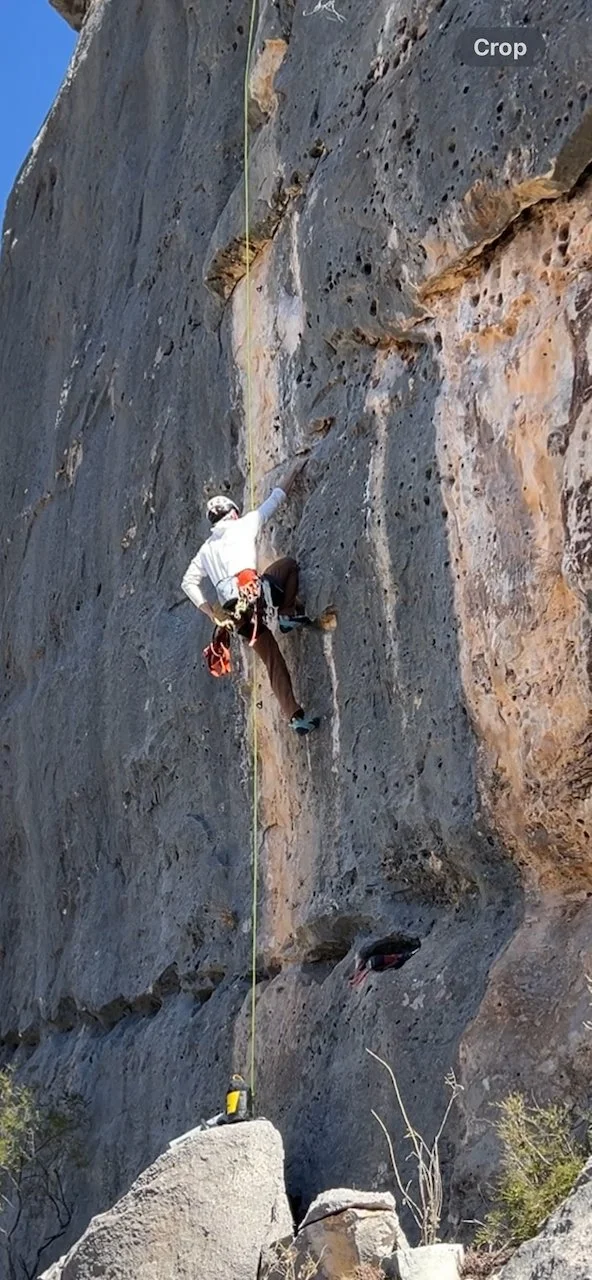
Brian rope soloing his project. March 2026.
I feel like we've lost a lot of climbing access over the years as the state has grown, so almost every crag that climbers enjoy today exists because climbers fought hard to keep it open. That's something I wish more people knew.
It's also worth noting that the Texas climbing community is incredibly resilient since they've experienced both the wins and the losses. They're welcoming, but they also understand that access takes work. If you're climbing at a Texas crag today, chances are there are decades of advocacy behind it.
Q: You recently picked up surfing. Has it changed the way you think about climbing?
Brian: More than I expected. Both sports require quick decision making, and sometimes there's a real consequence for making the wrong decision.
What surprised me most was how similar the communities feel. The first time I paddled out into a lineup, I felt like I already understood surfers because I understood climbers. There are a lot of shared personalities and values.
It's also been good to be new at something again. There's skill involved in being new at something. It’s been awhile since I started climbing, but the novelty of learning a new sport has helped me identify a little more with all of the new climbers I meet.
Q: What inspired you to pursue conservation and eventually join Access Fund?
Brian: It really came down to the people who were doing this work before me.
As I got more involved, I started seeing all of the behind-the-scenes work Access Fund had quietly been doing in Texas for decades. It almost felt like discovering a stack of declassified documents. There was so much work happening that climbers (including myself) never knew about, especially their work at Hueco Tanks dating back to the 90s.
Learning that history made a huge impression on me and made me want to be part of it.
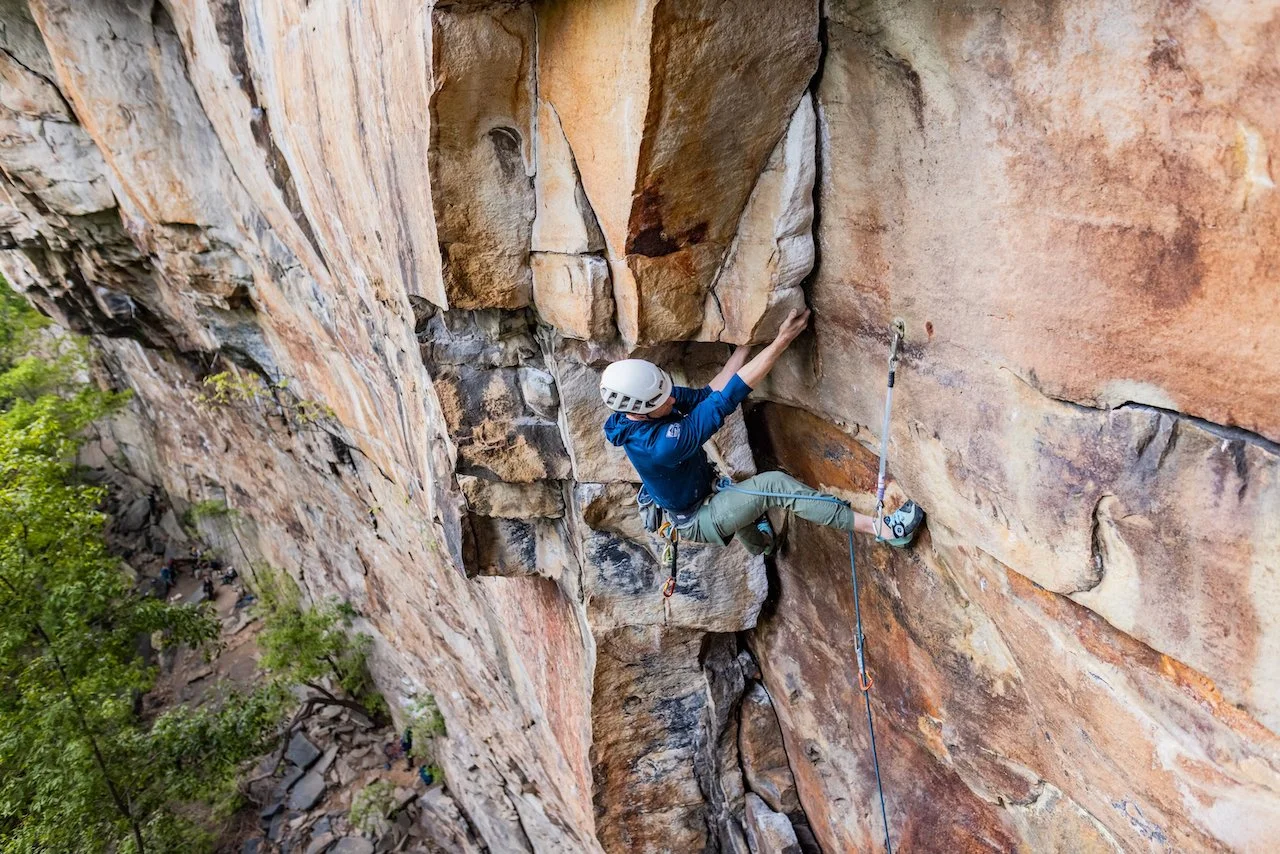
Brian climbing New Life, 11c in the New River Gorge. © Caleb Timmerman.
Q: What's your favorite part of your role today?
Brian: The relationships with landowners.
Many of them don't have any personal connection to climbing–at least not before I met them–but they care deeply about the land and I think they come to see the same care from climbers. Over time you get invited into their homes, meet their families, and sometimes share a meal together.
It’s those relationships that really make conservation work possible. Trust always comes before transactions.
Q: You recently spent your sabbatical at a ranch in West Texas. What drew you there?
Brian: Leading up to the sabbatical, I thought about going everywhere—Patagonia, Canada, Yosemite. But I kept coming back to Texas.
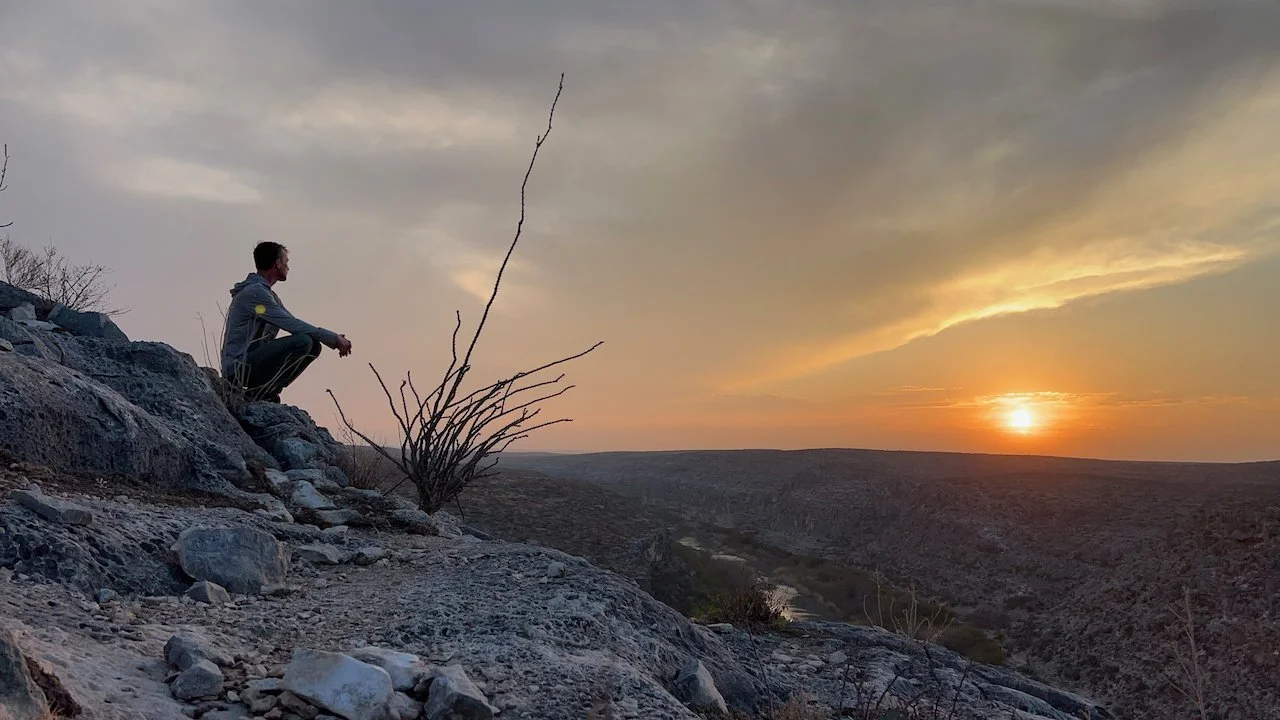
For more than 20 years I'd been scouting places around the state that I'd never had meaningful time to explore. I realized what I really wanted wasn't another far flung objective, it was more time. Time to capitalize on the places in Texas I'd only seen in passing.
On day one of my sabbatical, the landowner dropped me off at the most remote part of the ranch along with roughly 600 lbs of gear. He drove off leaving a dust cloud behind him that eventually vanished over the horizon. I started building camp and there was something about the ear-ringing quiet and all of those expedition boxes of gear that made me realize for the first time that I was actually on a pretty committing expedition.
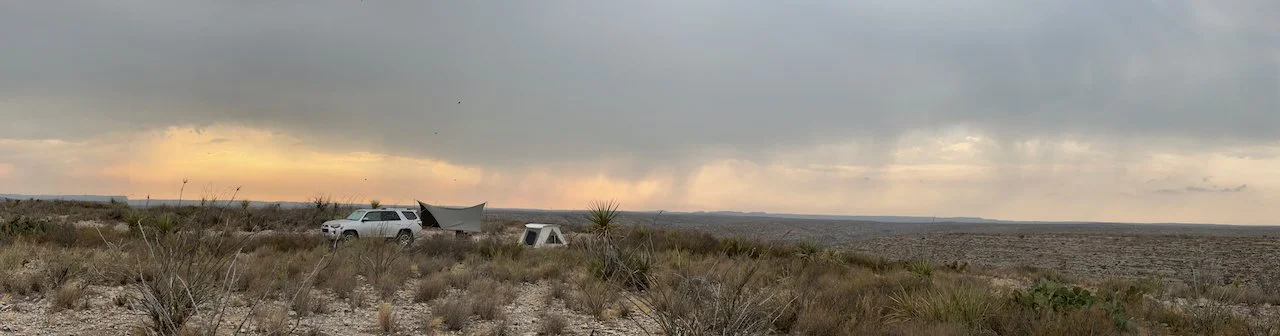
Brian camping during his sabbatical at Webb Camp, April 2026.
Q: Land acquisitions are some of Access Fund's most impactful work—but they're also some of the most secretive. Why?
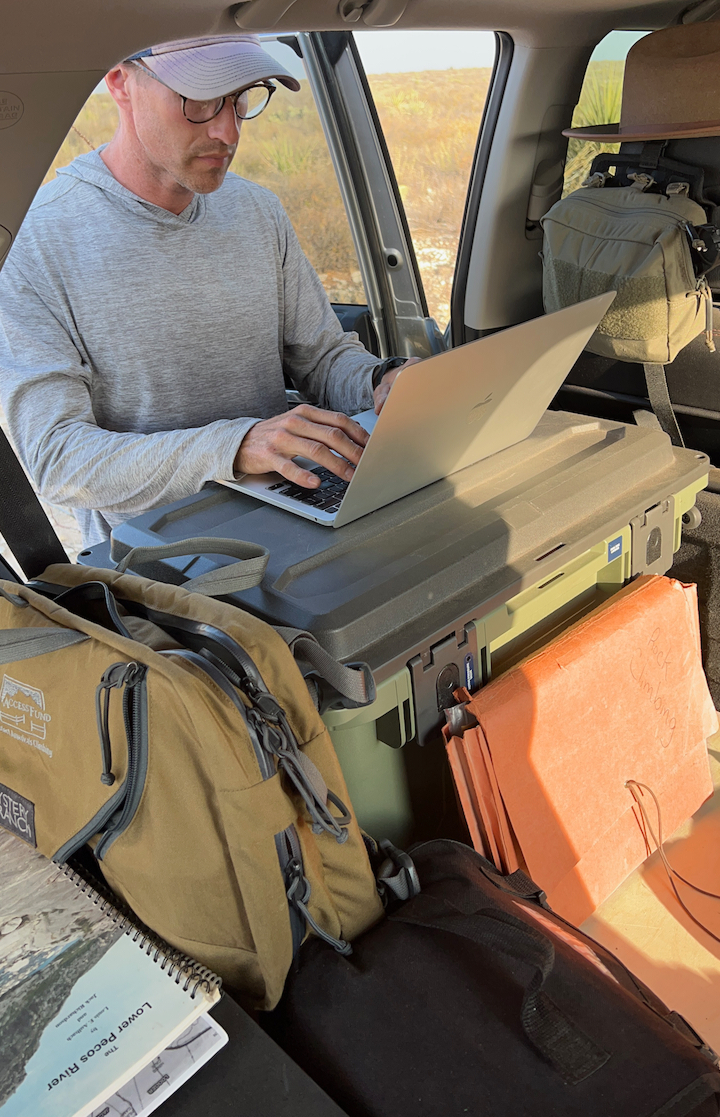
Brian working onsite in the field.
Brian: The biggest reason is protecting landowner privacy.
If we publicly talk about an acquisition while we're still exploring it or trying to get a property under contract, we're also announcing that there's climbing there. That can unintentionally lead to trespassing or create challenges for the landowner, especially if the deal ultimately falls apart.
There's also the reality that these are real estate transactions. Nobody wants to see a bidding war or invite unnecessary complications before a deal is complete.
At any given time, we're actively working on around a dozen acquisition projects, but we typically only close two or three each year. *insert gasp from staff interviewing Brian at this stat*
Q: We hear this question all the time: "Why doesn't Access Fund just buy every climbing area?"
Brian: (Laughs.) We’ll buy every crag if every climber joins Access Fund.
In all seriousness, buying land isn't always the answer. Access Fund doesn’t want to become an absentee landowner. Our goal is to work with Local Climbing Organizations in the region that know these places best and can steward them for generations.
Also, not every property is the right fit, and one bad deal could sink us. While it’s one powerful tool in our conservation toolbelt, it isn’t the only one.
Q: What role do everyday climbers play in land conservation?
Brian: Becoming an Access Fund member—or even better, a joint member with your Local Climbing Organization—is one of the most impactful things you can do.
Strong Local Climbing Organizations have the capacity to care for these places after they're purchased in a way that we might not be able to. And if you know of a climbing area that might need protecting, share that information with us. Some of our best conservation projects begin with a simple lead from the climbing community.
Q: Looking ahead, what excites you most about the future of Access Fund's land acquisition program?
Brian: Over the past year, I’ve been working with our team to lay the groundwork for the next 10 years of Access Fund’s acquisitions program. This includes everything from growing our fund to increasing the capacity of local climbing organizations to take on bigger projects.
And honestly? The dream would be finding the next major crag. Imagine protecting an incredible climbing area that most climbers haven't even discovered yet—and watching it become the next great climbing destination. That would be pretty special.
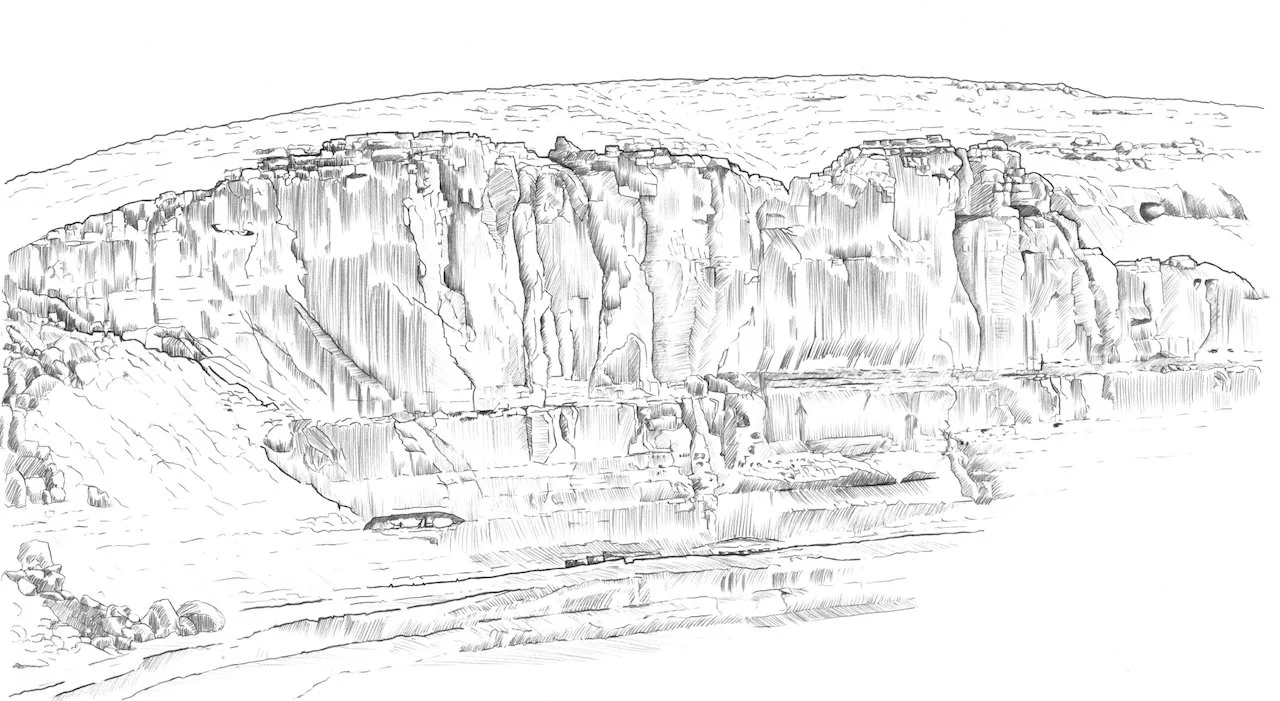
Drawing by Brian Tickle.
Want to support Brian’s work?
Access Fund is fighting every day to keep climbing areas open and protected. Become a member or donate today to help us protect the places you love to climb.