By Taylor Mckenzie Gerlach
For a climbing area, a bolting moratorium is like a dead end. No replacement of old or unsafe hardware. No placement of new fixed anchors.
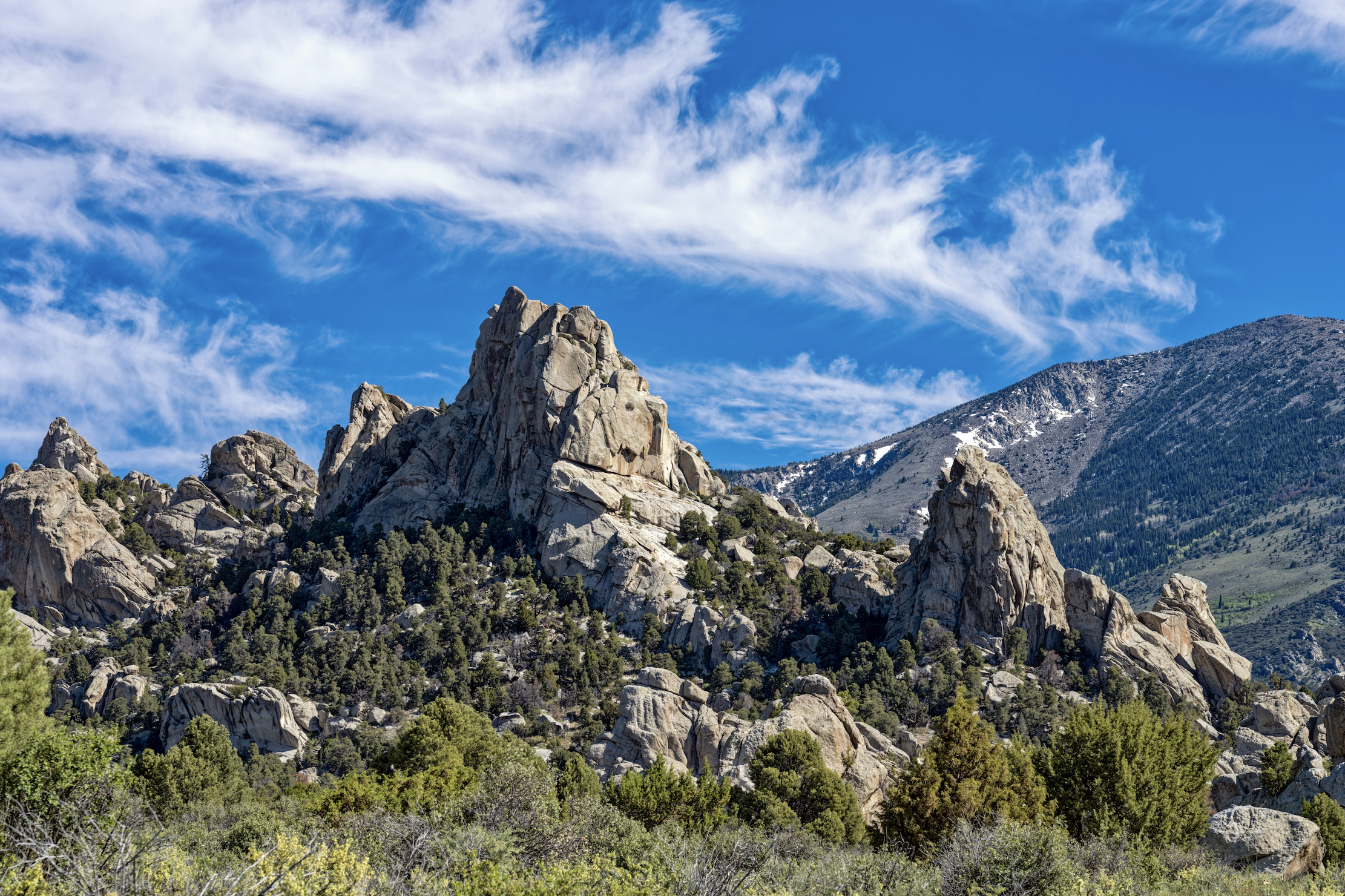
In the early 2010s, climbers at Idaho’s Castle Rocks State Park were in this dreaded position, barred by park officials from adding fixed hardware to the granite pinnacles rising from sagebrush and juniper just a few miles north of City of Rocks National Reserve in Almo, Idaho.
“They were having a lot of issues up at City of Rocks and Castle Rocks, specifically around a path forward to both replace existing hardware, but also a process to develop new routes,” Access Fund’s Western Regional Director and Policy Analyst Katie Goodwin said. “And so, effectively, the superintendent up there had issued more or less what we call a bolting moratorium.”
Delicate resources—nesting raptors, rare ferns, historical pictographs, archaeological sites, and fragile granite features—exist among the popular climbing area’s nearly 400 routes. Climbers and land managers found themselves facing multiple issues: erosion caused by social trails, granite walls stained by substandard hardware, inadvertent relocation of cultural artifacts, and disruption of fossilized plant material, known as packrat middens, tucked into routes’ crevices.
The proper tool to relieve situations like this: a Climbing Management Plan, or CMP. Many popular climbing areas don’t have rules or established plans around climbing; dedicated climbers simply go out and develop routes as they see fit. But as the popularity of areas—and impacts—grow, the lack of a well-defined management plan can quickly cause confusion and conflict. That’s there Access Fund steps in, working with the land manager and local climbers to codify how both groups will work together to preserve climbing access and protect resources.
“There’s really no one size fits all,” Goodwin said. “We want to come up with a plan that works for that area.” The 2015 Castle Rocks State Park CMP, for example, lays out a clear permitting process for creating new routes, maps areas permanently closed to protect the most delicate resources, and displays images of cliff swallow nests, ferns, and middens that climbers must avoid.
With the plan in place, climbers could once again develop new routes, adhering to the plan’s specifications for bolt length and hanger camouflaging to match surrounding rock, among other standards. The planning process also allowed for a comprehensive inventory of routes, fixing older routes, and replacing fixed anchors as needed.
“We want to find that balance of allowing reasonable access, but also protecting the resource. And that’s where these CMPs are helpful.”
CREATING A CMP can be a multi-year process, starting with local climbers reaching out to Access Fund: “‘Hey, we’re really struggling with this. The land manager is not allowing us to develop new routes. The land manager is not allowing us to replace fixed anchors,’” Goodwin often hears. “Or in some cases, if the land manager is concerned about liability or other things, they might say ‘they’re not allowing us to climb at all.’”
The work begins with a lot of listening. Meetings and site visits provide Access Fund with insights from the land manager and local climbers, who are usually part of a local climbing organization, one of the 120-plus Access Fund-affiliated groups of climbers and volunteers across the country. If a CMP would be helpful—usually, Goodwin said, it’s the only path forward in the case of a bolting moratorium—Access Fund gets to work helping land managers draft it.
At times, the first step is simply educating land managers about climbing use: explaining the difference between bouldering, sport, and trad climbing, demonstrating how fixed anchors work, and describing climbing use patterns on trails and staging areas.
Access Fund is uniquely positioned to bridge the gap between land managers and climbers in these high-stakes planning processes. That’s partially thanks to a robust policy team specializing in legislation and bills that affect public lands, the quagmire of federal and state regulations governing public lands, and even the technical specifics CMPs might require, which could include biological surveys or a complex National Environmental Policy Act process.
While fixed anchor use is often the primary pain point that necessitates a CMP, Goodwin said, the impact from unregulated approach trails, belaying areas, and bouldering spots is another common reason conflict arises, and one that a CMP would address. Access Fund, for their part, can lend a trained trail crew to fix access trails, map areas, build a stewardship plan for maintenance, and mobilize volunteers from the 8 million climbers they represent through organized trail days and Adopt a Crag events.
“There are still a lot of areas that need Climbing Management Plans, specifically on Forest Service land,” Goodwin said, especially with the recent Protecting America’s Rock Climbing Act mandating all federal lands issue guidance on managing climbing in Wilderness areas.
Expecting “a real landslide” of CMPs in the next few years, said Goodwin, Access Fund stands ready to advocate for America’s climbers and protect sustainable access to climb in our favorite places.