Repealing the Bureau of Land Management’s Public Lands Rule Weakens Climbing Stewardship
Access Fund opposed the Bureau of Land Management’s (BLM) repeal of the Conservation and Landscape Health Rule, also known as the Public Lands Rule, because climbing access depends on more than whether a crag itself remains open. It depends on the surrounding landscape: roads, approaches, staging areas, campsites, soils, wildlife habitat, cultural resources, and the broader setting that gives each climbing area its unique character and recreation experience.
The Public Lands Rule gave BLM a clear framework for considering those often competing values in land-use planning. It recognized conservation as a valid use under BLM’s multiple-use mandate and provided tools for evaluating land health, restoring damaged lands, and protecting intact areas to prevent land-use conflicts. For climbing areas, that matters because access problems often begin at the trailhead, along the approach, in dispersed camping areas, or in nearby decisions about roads, rights-of-way, mineral activity, and other surface disturbance.
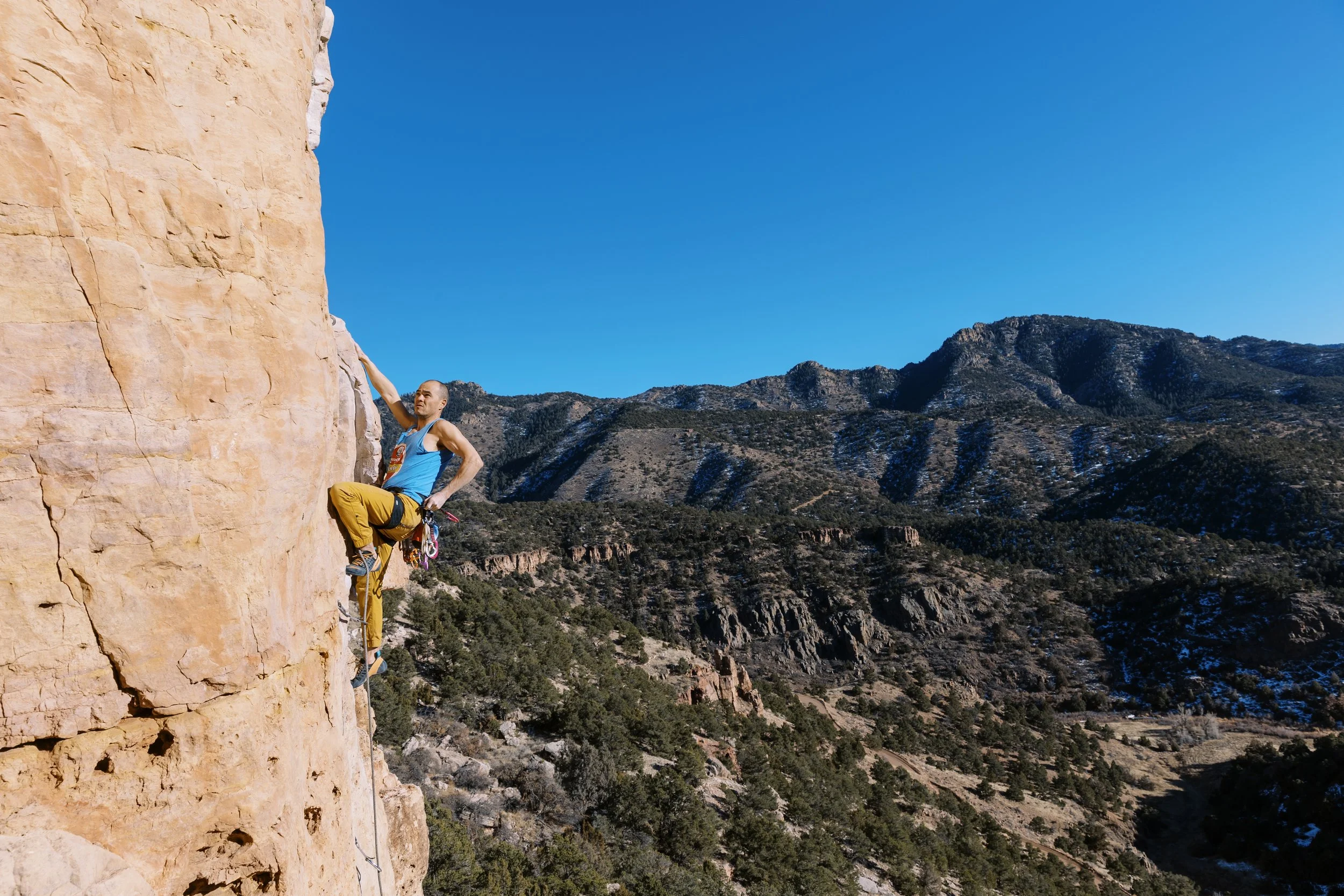
Many important climbing landscapes are not national parks, national monuments, wilderness areas, or national conservation areas, and therefore rely heavily on BLM’s core planning and stewardship tools. For example, in Utah, Fisher Towers, Castleton Tower, Kane Creek, Long Canyon, the San Rafael Swell, and Ibex all require careful management of approaches, parking, fragile desert soils, cultural resources, scenic values, camping, and road corridors. Across the West, the same is true at Shelf Road and Unaweep Canyon in Colorado, Lime Kiln Canyon and the Virgin River Gorge on the Arizona Strip, and The Box Recreation Area near Socorro, New Mexico.
The Public Lands Rule did not establish new protected designations for these places. It gave BLM better tools—such as land-health assessments, intact-landscape analysis, restoration authorities, and conservation leasing—to account for the conditions that make climbing areas sustainable. Repealing the rule moves BLM away from that integrated approach and increases the risk that recreation values will be addressed too late, impacts will be evaluated project by project, and field offices will have fewer tools to restore damaged access corridors or protect the land around heavily used cliffs.
That matters because climbers have spent decades building a stewardship ethic around public lands: replacing social trails with sustainable approaches, improving staging areas, supporting seasonal wildlife closures, managing camping impacts, and working with agencies to solve access problems before they escalate. The Public Lands Rule fit that ethic by treating conservation, restoration, and recreation quality as connected parts of responsible public-land management.
Despite the repeal of the Public Lands Rule, Access Fund will continue working with BLM, local climbing organizations, guides, Tribes, rural communities, and conservation partners to defend climbing access and protect the places where we climb. But losing the Public Lands Rule makes that work harder in BLM climbing areas that depend on core land-use planning—not special designations—to protect the landscapes that provide some of America’s best climbing opportunities.